
Choosing milk for children sounds simple at first. But once parents start comparing labels, hearing about A1 and A2 milk, or reading different opinions online, the decision can quickly become confusing.
Some families are looking for fresher dairy. Others want milk that feels less processed. Many simply want something they can feel confident serving every morning before school. This is where A2 milk often enters the conversation.
But is A2 milk actually good for kids? And how should parents think about it realistically, without marketing hype or fear-based claims?
Quick Answer: Is A2 Milk Good for Kids?
A2 milk can be a suitable option for many children as part of a balanced diet, depending on individual preferences, tolerance, and nutritional needs.
It contains the A2 type of beta-casein protein, which is commonly associated with indigenous Indian cow breeds like Gir and Sahiwal. Some parents say their children find A2 milk lighter or easier in daily use, although experiences can vary from child to child.
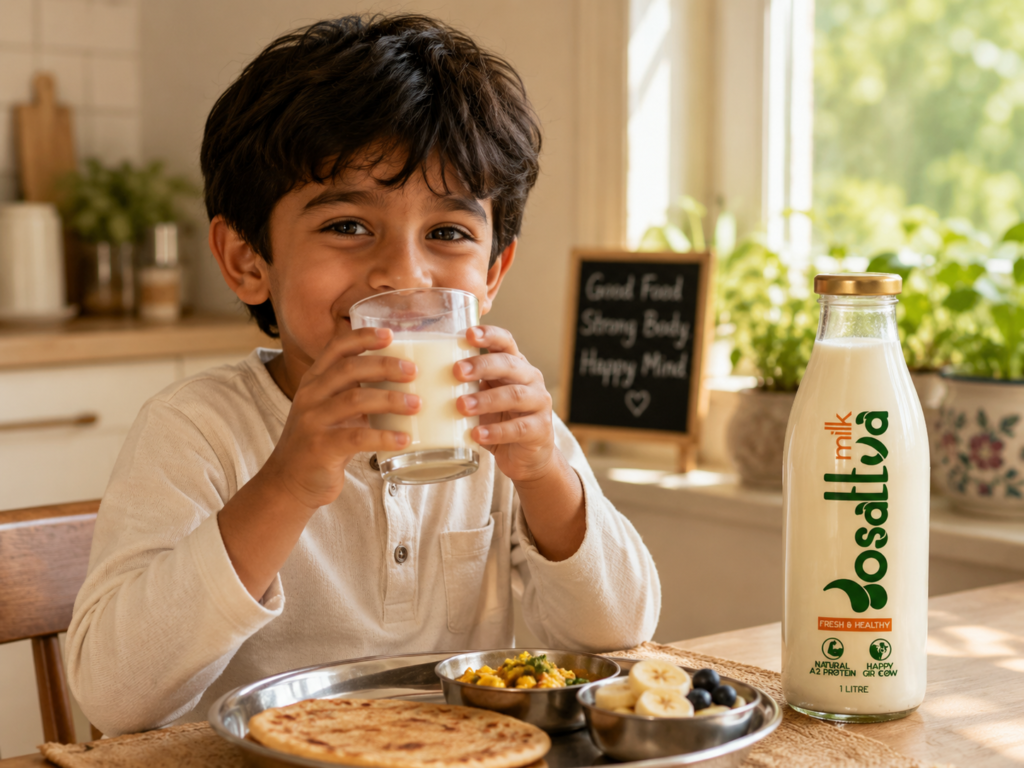
A2 milk is not a medical treatment or guaranteed solution for digestion issues. However, many families prefer it because of its taste, freshness, sourcing transparency, and traditional association with desi cow milk.
The most important factor is choosing safe, hygienically handled, trustworthy dairy that fits your family’s routine and your child’s comfort.
What Is A2 Milk?
Milk naturally contains several proteins. One of them is called beta-casein.
The two most discussed forms are:
● A1 beta-casein
● A2 beta-casein
A2 milk comes from cows that naturally produce predominantly A2 beta-casein protein.
For many parents, the topic becomes confusing because all milk packets may initially look similar. The difference is usually discussed more around:
● protein type,
● sourcing,
● processing,
● and overall milk experience.
This is also why some families say they notice differences not in nutrition charts first, but in everyday kitchen use. A2 milk is found to be easily digested without causing any bloating or digestive issues. It is less processed and comes from happy free grazing cows, especially the Gosattva Farms A2 Milk. Happy cows = More nutritious milk. And it is much closer to Ayurveda than regular milk. Despite this, it has a similar nutritious profile than normal milk.
Gosattva Farms also share their lab tests report because they believe a consumer should be aware of what they are consuming, especially with something as basic as milk.
Why Some Parents Prefer A2 Milk for Kids
Not every family switches to A2 milk for the same reason.
For some, it begins with curiosity. For others, it starts after hearing friends discuss freshness, creaminess, or traditional desi cow milk.
Many parents simply want milk that feels closer to what they remember growing up with.
1. Daily Routine Comfort
Milk is often part of a child’s everyday routine:
● morning breakfast,
● evening milk,
● milkshakes,
● cereals,
● curd,
● kheer,
● or bedtime haldi milk.
This makes daily comfort important.
Some consumers report that A2 milk feels lighter during digestion compared to certain conventional milk variants. However, individual experiences vary while the scientific understanding in this area is still rapidly evolving.
A few clinical studies have explored digestive responses related to A1 and A2 beta-casein milk under specific conditions. Some participants reported reduced digestive discomfort with A2 beta-casein milk during those studies. However, these findings should not be interpreted as guaranteed outcomes for all individuals.
2. Taste and Creaminess
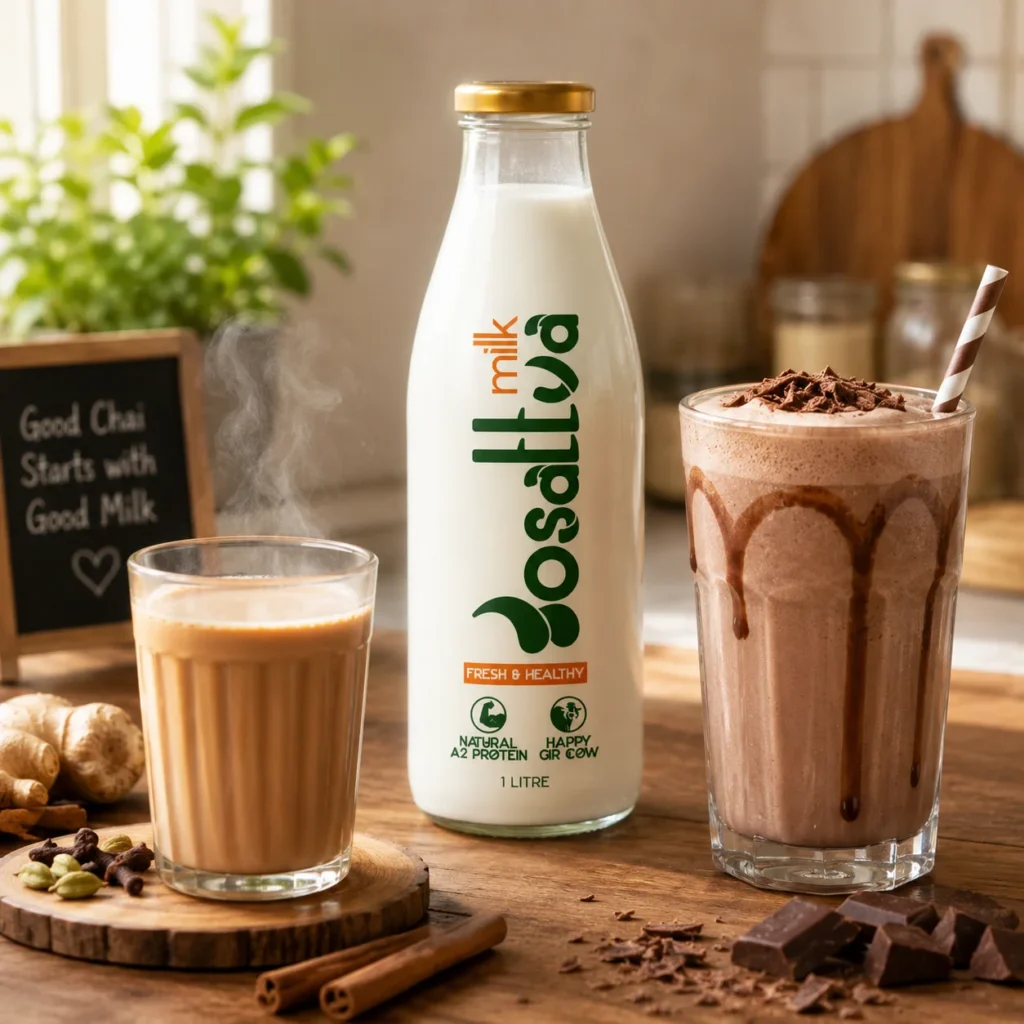
Many families first notice the difference in tea or coffee.
Some people describe farm-fresh A2 milk as:
● richer,
● fuller,
● or naturally creamy.
When boiled and cooled, many minimally processed milk variants naturally form a visible cream layer on top. Families often associate this with freshness and lower processing levels.
Children may also notice texture differences in:
● hot chocolate,
● milkshakes,
● homemade curd,
● or simple warm milk before bed.
Taste preferences differ between households, though. Some children may immediately like the richer feel, while others may need time to adjust.
3. Connection With Traditional Indian Dairy Habits
In many Indian homes, milk is more than a beverage.
It becomes part of:
● breakfast routines,
● festival sweets,
● chai preparation,
● curd setting,
● ghee,
● and family comfort foods.
For parents trying to reconnect with more traditional food habits, A2 milk sometimes feels
emotionally familiar.
People often describe it as:
“Bachpan wala doodh.”
Or:
“Malai naturally jamti hai.”
Of course, nostalgia alone should not replace practical considerations like hygiene, refrigeration, and sourcing transparency.
What Research Says About A2 Milk
This is where balanced understanding matters.
Some scientific studies have explored differences between A1 and A2 beta-casein proteins, particularly around digestion-related experiences.
However:
● research is still developing,
● individual responses vary,
● and A2 milk should not be marketed as a cure or medical solution.
Parents should also remember:
● digestion experiences can differ between children,
● milk tolerance depends on multiple factors,
● and pediatric guidance may be important for specific dietary concerns.
If your child has diagnosed allergies, lactose intolerance, or digestive conditions, it is best to consult a qualified healthcare professional before making major dietary changes.
What to Check Before Choosing Milk for Children
A common mistake is focusing only on labels like “A2.”
In reality, overall dairy quality depends on several factors.
Source Transparency
Many premium dairy buyers today want transparency not just about nutrition, but also about:
● sourcing,
● hygiene,
● processing,
● and handling practices.
Before choosing milk, parents may want to check:
● where the milk comes from,
● how it is handled,
● refrigeration practices,
● and delivery timelines.
Freshness and Storage Matter
Fresh dairy products are usually best stored immediately under refrigeration after delivery.
Like many minimally processed dairy products, farm-fresh milk may have a shorter freshness window compared to ultra-processed shelf-stable milk.
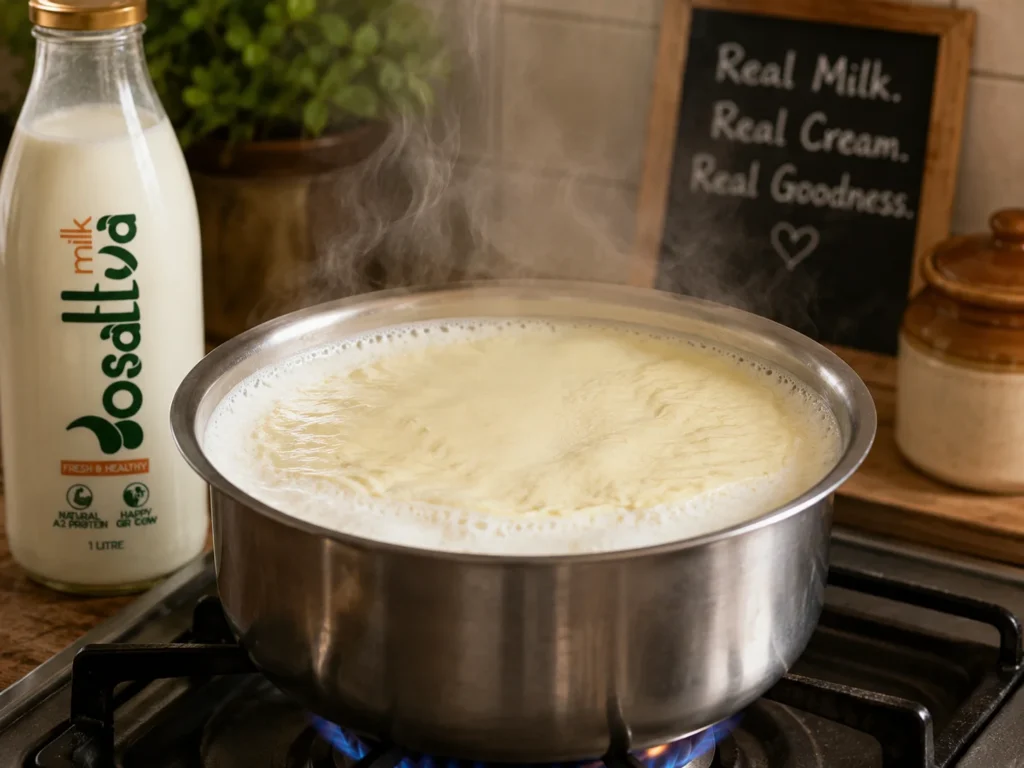
Under refrigeration, fresh milk commonly stays suitable for around 48–72 hours depending on:
● storage temperature,
● handling,
● boiling practices,
● and packaging conditions.
Changes in smell, texture, or unusual separation beyond normal cream formation may indicate spoilage.
During Indian summers, refrigeration timing becomes even more important because minimally processed dairy products are more temperature-sensitive.
Practical Questions Parents Should Ask
Before subscribing to any milk service, it helps to ask:
● What is the delivery schedule?
● How quickly is milk refrigerated?
● What hygiene process is followed?
● Is the milk heavily processed?
● How should it be stored after delivery?
This creates more confidence than relying only on marketing words like “pure” or “farm fresh.”
Who May Prefer Different Dairy Options?
Honest dairy education also means acknowledging that A2 milk may not be necessary for every household.
Some families may prioritize:
● longer shelf life,
● wider availability,
● lower pricing,
● or convenience.
Others may not notice major sensory differences depending on how milk is used daily.
Families looking mainly for ultra-long storage convenience may prefer differently processed dairy options.
The goal is not to fear regular milk. The goal is informed choice.
How Families Commonly Use A2 Milk at Home
One reason parents explore A2 milk is because milk is deeply connected to daily Indian food habits.
Chai and Coffee
Many people say the richness becomes noticeable first in chai.
Tea may feel:
● creamier,
● fuller,
● or slightly richer in texture.
Homemade Curd
Some families prefer using farm-fresh milk for curd setting because texture and cream formation can become more visible naturally.
Breakfast and School Routines
A2 milk is commonly used in:
● oats,
● milkshakes,
● cereals,
● banana shakes,
● smoothies,
● and simple warm milk before school.
Haldi Milk at Night
Warm haldi milk remains a comforting bedtime ritual in many Indian homes.
The aroma and texture often become more noticeable when milk is minimally processed and naturally creamy.
Summary Box
Best For
● Families looking for farm-fresh dairy options
● Parents exploring traditional dairy choices
● Households wanting sourcing transparency
What Some Families Commonly Notice
● Richer taste
● Visible cream layer
● Different chai texture
● Daily-use comfort observations
What to Check Before Buying
● Hygiene practices
● Delivery timelines
● Refrigeration guidance
● Source transparency
● Storage expectations
Final Advice
Choose dairy based on:
● your child’s comfort,
● trusted sourcing,
● freshness,
● and practical family routine needs.
Avoid extreme claims or fear-based comparisons.
Frequently Asked Questions
Is A2 milk safe for kids?
For many children, A2 milk can be part of a balanced diet when sourced and handled properly. Individual dietary needs may vary.
Can kids drink A2 milk daily?
Many families include A2 milk in daily routines. Portion and suitability depend on overall diet and individual tolerance.
Does A2 milk taste different?
Some consumers describe it as creamier or fuller in taste, especially in chai or warm milk.
Is A2 milk lactose-free?
No. A2 milk still contains lactose unless specifically processed otherwise.
Can A2 milk be used for curd setting?
Yes, many families use it for homemade curd, paneer, and traditional dairy recipes.
Why does fresh milk form cream on top?
Many minimally processed milk variants naturally develop a visible cream layer after cooling.
How long does fresh milk stay good?
Typically around 48–72 hours under refrigeration, depending on handling and storage conditions.
Is farm-fresh milk hygienic?
Hygiene depends on sourcing, handling, refrigeration, and delivery practices. Always choose transparent and trusted dairy providers.
Final Thoughts
Choosing milk for children is rarely only about nutrition charts.
It is also about:
● trust,
● routine,
● freshness,
● family comfort,
● and confidence in what reaches the dining table every day.
A2 milk is not a miracle product. But for some families, it feels like a more traditional and transparent dairy choice that fits naturally into daily life.
The right milk is the one that works realistically for your child, your kitchen routine, and your comfort level as a parent.
If freshness, sourcing transparency, and traditional dairy practices matter to your family, exploring farm-fresh A2 dairy options may be worth considering carefully and calmly.
Explore farm-fresh A2 dairy options from Gosattva Farms and compare what fits naturally into your family’s daily routine.